🇭🇷Ready to start a new adventure across the Channel? If you’re planning a move to Zadar, this guide will give you all the practical steps, updated costs, and streamlined advice you need for a smooth transition.
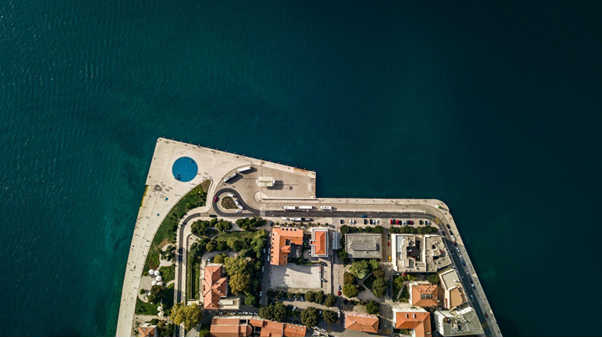
What should I know about living in Zadar at a glance?
- Flag: 🇭🇷
- Population: 72700
- Currency: Euro (EUR)
- Average salary: Around 1,069€/month (after tax)
- Live EUR ←→ Dollar: Use dynamic currency converters for the latest exchange rates
- Destatis, 2024, destatis.de
- European Central Bank, 2024 ecb.europa.eu
- XE, 2024, xe.com
Reviewed by the citypopulation, last updated in July 2025; European Central Bank Monetary Policy Department, last updated in July 2025; Numbeo, last updated in August 2025.
How Much Does It Cost to Move Your Belongings to Zadar?
The cost of relocating to Zadar depends on shipment size, transportation method, origin, and any additional fees such as customs clearance. Below are typical market rates as of mid-2025:
| Shipment Method | Transit Time | Estimated Cost (EUR) |
| 20-ft container | ~2–5 weeks | €1,300–3,600 |
| 40-ft container | ~2–5 weeks | €2,400–5,100 |
| Air freight (per m³) | Few days | €450–900+ |
| Customs / VAT fees | — | ~€250–700 (if applicable) |
Reviewed by Freightos Market Analytics Team and Maersk Logistics Research Team, last updated in July 2025.
Use a real-time moving calculator for a tailored quote with ReloAdvisor.
Real-life case:
“When I relocated from Milan to Zadar in September 2025, I shipped about 14 cubic meters of personal belongings using a 20-ft container. The total cost, including customs clearance and delivery to my new home, was around €2,350. The shipment arrived in just under four and a half weeks, and everything went smoothly from port to door.” — Ivana T., moved in September 2025
Many people relocating to Croatia choose to settle in one of the five most popular cities for newcomers, including Zagreb, Split, Dubrovnik, Rijeka, and Zadar. These cities offer diverse career opportunities, rich cultural experiences, excellent public transportation, and vibrant international communities.
How to understand the cost of living in Zadar?
As of mid-2025, Zadar combines Mediterranean charm with relatively affordable living costs. A single person’s average monthly expenses (excluding rent) are approximately €796.70. Renting a one-bedroom apartment in the city center averages around €642.86, while monthly utilities for an 85 m² apartment typically fall near €161.21. Public transportation remains economical, with a monthly pass costing about €39.82.
Zadar presents an attractive option for newcomers—particularly those seeking a balance between affordability, coastal living, and cultural richness—making it an appealing alternative to more tourist-heavy locations like Dubrovnik or Split.
| Expense Category | Average Monthly Cost (€) |
| Single person’s expenses (excluding rent) | 796.70 |
| Rent – 1-bedroom apartment (city center) | 642.86 |
| Utilities – 85 m² apartment | 161.21 |
| Public transport – monthly pass | 39.82 |
Reviewed by Numbeo Data Quality Team, last updated in June 2025
How to Apply for a Visa and Meet Residency Requirements for Croatia?
A visa is required for most non-EU/EEA nationals who wish to live, work, or study in Croatia. The most common long-term visa is the National Visa D, which allows stays of more than 90 days for purposes such as employment, study, research, or family reunification. For those planning to remain beyond six months, a residence permit is required. Eligibility typically includes proof of sufficient financial means, valid health insurance, accommodation in Croatia, and a clear purpose of stay. For short visits under 90 days, travelers generally apply for a Schengen Type C visa, which covers tourism and business trips.
✅ Visa types and eligibility check: Croatian National Visa & Residence Permits
📝 Online application & consular booking: Croatian Consulate e-appointment system
Reviewed by the Ministry of the Interior of the Republic of Croatia, last updated in July 2025
How to Access Healthcare and Insurance Options in Croatia?
Croatia provides high-quality healthcare through its public system, the Croatian Health Insurance Fund (HZZO), covering doctor visits, hospital care, maternity services, and prescriptions. Legal residents contribute via mandatory health insurance, typically deducted from payroll or paid directly by self-employed individuals.
New residents must register with their local HZZO office to obtain a health insurance number. Registration requires proof of residence, a valid ID, and, if applicable, employment documentation. Many newcomers also choose private health insurance for faster access to specialists, private clinics, or additional coverage beyond the public system.
Reviewed by the Croatian Health Insurance Fund (HZZO), last updated in July 2025
How to Navigate the Housing Market as a Newcomer to Zadar?
Renting in Zadar typically requires a security deposit of one to three months’ rent, proof of income, valid identification, and occasionally a local guarantor. Rental contracts, often called “Ugovor o najmu”, are usually signed for one year with renewal options, though longer terms are possible. Utilities such as electricity, water, gas, and internet are generally billed separately.
For those looking to buy property, additional costs such as property transfer tax, notary and registration fees, and real estate agency commissions can add approximately 4%–6% of the purchase price.
Popular residential neighborhoods for newcomers in Zadar include:
- Old Town (Poluotok) – Historic center with Roman and Venetian architecture, lively cafes, and cultural landmarks
- Borik – Coastal district known for beaches, hotels, and family-friendly amenities
- Diklo – Quiet residential area with seaside villas and good connections to the city
- Bulevar – Modern neighborhood with convenient shopping, schools, and transport links
Reviewed by Njuškalo and RE/MAX Hrvatska, last updated in July 2025
How to Understand Your Tax and Pension Obligations in Croatia?
If you are a tax resident in Croatia (generally if you spend more than 183 days per year in the country or maintain your primary residence there), you are subject to taxation on your worldwide income. Employees and self-employed individuals must also contribute to Croatia’s social security system, which funds pensions, healthcare, and unemployment benefits. Croatia has signed multiple double taxation treaties to prevent residents from being taxed twice on the same income earned abroad.
| Tax Component | Description | Notes |
| Income Tax (Porez na dohodak) | Tax on global income | Progressive rates from 20% up to 36%, depending on income |
| Social Security (Doprinosi za socijalno osiguranje) | Mandatory contributions for pensions, healthcare, and welfare | Paid by both employer & employee; includes health insurance, pension, unemployment contributions |
| Double Tax Treaties | Prevent double taxation | Agreements with over 50 countries |
Reviewed by the Croatian Ministry of Finance and the Croatian Tax Administration, last updated in April 2025
How to Comply with Customs and Duty Rules When Moving to Croatia?
When relocating to Croatia, you may import your used personal belongings duty-free if they have been owned and used for at least six months and are intended solely for personal use. To qualify for the exemption, you will need to provide a detailed inventory, proof of residence transfer to Croatia, a bill of lading or airway bill, and valid identification such as a passport or residence permit.
New items or commercial goods are generally subject to import duties and Croatian VAT. Certain restricted items—such as alcohol, tobacco, firearms, or high-value electronics—may require special permits or additional documentation. Making an accurate and transparent customs declaration is essential to avoid inspection delays, fines, or unexpected charges. Major customs offices in Croatia, including Zagreb, Rijeka, and Split, handle most relocation-related clearances.
Reviewed by the Croatian Customs Administration (Carinska Uprava), last updated in February 2025
Real-life case:
“When I relocated from Berlin to Zadar in September 2025, I shipped about 15 cubic meters of household belongings using a 20-ft container. The total cost, including customs clearance and delivery to my new apartment, was approximately €2,400. The shipment arrived smoothly in just over four weeks.” — Ana K., moved in September 2025
How to Manage Pet Relocation When Moving to Croatia?
Pets entering Croatia must comply with health and identification regulations. Dogs, cats, and ferrets are required to have a microchip, a valid rabies vaccination, and an official veterinary health certificate issued within 10 days of travel. For pets arriving from non-EU countries, additional certified documents such as an EU Animal Health Certificate may be necessary, and some animals could be subject to extra checks or short-term quarantine at Croatian entry points.
To ensure smooth entry, it is strongly recommended to notify Croatian customs and veterinary authorities in advance. Many pet owners also choose to work with professional pet relocation services that can manage the paperwork, transport, and compliance process, helping to reduce stress and prevent delays upon arrival.
Reviewed by the Directorate-General for Health and Food Safety (DG SANTE), last updated in March 2025
How to Import a Car and Swap Your Driver’s Licence in Croatia?
Imported vehicles must be declared to the Croatian Customs Administration (Carinska Uprava). Cars from outside the EU may be subject to import duties, VAT, and must meet EU safety and environmental standards. Permanent imports require a technical inspection and registration with the local vehicle registration office (Stanica za registraciju vozila). Key documents include the original title, proof of ownership, and a Certificate of Conformity (CoC).
Vehicles over 30 years old may qualify as historic vehicles and benefit from certain tax exemptions. Modern cars must comply with Croatian or EU homologation standards; non-compliant vehicles may need modifications before registration.
Foreign driver’s licenses are valid for temporary stays, but residents must exchange them within six months. EU/EEA licenses are swapped without tests, while many non-EU licenses require passing theory and practical driving exams.
Reviewed by the Croatian Ministry of the Interior and Croatian Customs Administration, last updated in July 2025
How to Open a Bank Account and Obtain a Tax ID in Croatia?
To open a bank account in Croatia, you generally need a valid passport or national ID, proof of Croatian address (such as a rental contract or utility bill), and in many cases your Croatian personal identification number (OIB – Osobni identifikacijski broj). This number is essential for a wide range of financial and legal activities, including employment, healthcare registration, and rental agreements.
Major Croatian banks—such as Zagrebačka Banka, Erste Bank Croatia, and Raiffeisenbank Croatia—offer accounts for non-residents and newcomers. Many provide English-language services, online banking, and tailored products for expatriates. Non-residents can often open a basic account with minimal requirements, and once legal residency is confirmed, the account can be upgraded to access additional services like overdrafts, loans, and investment opportunities.
The OIB can be obtained through the Croatian Tax Administration (Porezna uprava) and is required for employment registration, signing contracts, or accessing certain public services.
Reviewed by the Croatian National Bank (Hrvatska narodna banka) and Croatian Tax Administration (Porezna uprava), last updated in July 2025
Where can I find tools and more resources before moving?
For further guidance, make use of the volume calculator, book a video survey, or explore comprehensive guides for Portugal and Austria with ReloAdvisor.