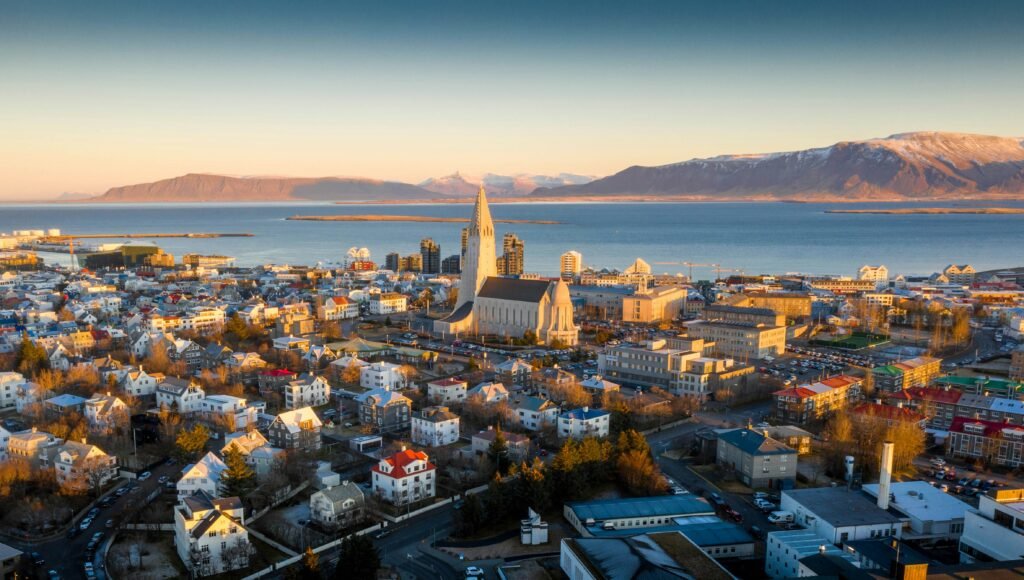
🇮🇸 Planning your move to Reykjavík? This guide provides all the practical steps, updated costs, residency requirements, living tips, and expert advice you need for a smooth and successful relocation to Reykjavík — Iceland’s capital, main business hub, and the cultural heart of the country.
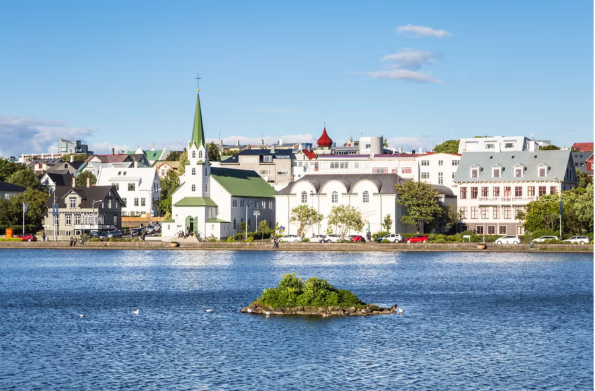
What should I know about living in Reykjavík at a glance?
- Flag: 🇮🇸
- City: Reykjavík
- Currency: Icelandic Króna (ISK)
- Average Salary: Around 7,700,000 ISK/year (~€50,000), reflecting higher income levels compared to the rest of Iceland
- Population: ~145,000 in the city proper; about 240,000 in the wider capital region (2025)
- Lifestyle: Dynamic Nordic city, blending modern culture with proximity to nature; cosmopolitan community but small in size compared to other capitals
- Transport: Excellent bus system, cycling on rise; most households own a car, international travel via Keflavík Airport nearby
- Live EUR↔ISK rates: Use online currency converters (European Central Bank, Central Bank of Iceland, XE Financial Data Team, last updated in July 2025).
Reviewed by Icelandic Statistical Office, European Central Bank, Central Bank of Iceland, XE Financial Data Team, last updated in July 2025.
How much does it cost to move door-to-door to Reykjavík?
International shipments to Reykjavík typically arrive through its main port or via Keflavík Airport in the case of air freight. Container shipping can take three to five weeks, while air freight normally arrives within a week. Customs clearance is strict with new goods and may extend delivery if documentation is incomplete.
| Move Type | Time | Cost (EUR) |
| 20ft container | 3–5 weeks | 2,200–3,800 |
| 40ft container | 3–5 weeks | 4,000–6,200 |
| Air freight (1m³) | 5–7 days | 1,300–1,800 |
| Customs Fees | — | 200–400 |
Reviewed by Maersk Logistics Research Team and Freightos Market Analytics Team, last updated in July 2025.
Use a real-time moving calculator for tailored estimates.
Real-life case:
“I relocated from Canada to Reykjavík with my family. The shipment took just over a month to arrive, and customs required very detailed receipts for our electronic items. Having everything translated into English and Icelandic really helped.” — Emma T., March 2025.
Most expats in Iceland live in Reykjavík, the capital and main international hub. Kópavogur and Hafnarfjörður, close to Reykjavík, are popular with families thanks to their residential atmosphere and access to schools and services. Outside of the capital, Akureyri in the north attracts students and workers in tourism. Reykjanesbær, located near Keflavík International Airport, is also home to many expats in the aviation and service industry.
Reviewed by Icelandic Statistical Office, last updated in January 2025.
What are the customs and duty rules when moving belongings?
Household belongings that have been owned and used abroad can be imported duty-free if you are registering permanent residence in Reykjavík. New goods are heavily scrutinized by customs and can be subject to VAT at 24%. Alcohol, tobacco, and restricted goods like firearms or certain medications require special permits and are rarely granted exemptions.
Reviewed by Icelandic Directorate of Customs, last updated in July 2025.
Real-life case:
“My used furniture cleared quickly, but one newly purchased device was flagged for VAT. Having organized paperwork sped the process and avoided delays.” — Oliver W., April 2025.
What should my pre-move checklist include?
Moving to Reykjavík requires forward planning. About twelve weeks before, non-EU applicants should apply for residence permits. Eight to ten weeks before, movers should be booked and essential records for schools, healthcare, and pets gathered. Around six weeks out, housing should be secured since demand in Reykjavík is particularly high. In the final two weeks, prepare health insurance, open a bank account if possible, and confirm travel arrangements.
Reviewed by Expatica Iceland Team, last updated in January 2025.
What is the cost of living in Reykjavík?
Reykjavík is Iceland’s most expensive city due to limited housing supply and the high cost of imported goods. Public services are reliable, public transport covers most of the city, and salaries reflect the high cost of basic living.
| Expense | Reykjavík (EUR/mo) |
| Rent (1-bedroom city center) | 1,300–1,800 |
| Groceries | 500 |
| Public Transport (pass) | 50 |
| Utilities | 150–180 |
Reviewed by Numbeo Data Quality Team, last updated in June 2025.
What do I need to know about visas and residency in Reykjavík?
Residents from EU or EEA countries can live and work in Iceland freely, though they must register if staying longer than three months. Non-EU nationals must secure residence permits in advance, typically based on work, study, or family reunification. Citizenship applications may be considered after seven years of continuous residence, provided applicants meet integration and language requirements.
Reviewed by Iceland Directorate of Immigration, last updated in July 2025.
How can I bring pets with me to Reykjavík?
Pets are subject to strict import controls in Iceland. They must be microchipped, vaccinated against rabies, and meet additional health requirements. Import permits are mandatory, and animals must spend between two and four weeks in quarantine upon arrival. Direct entry is only permitted via Keflavík Airport.
Reviewed by Icelandic Food and Veterinary Authority (MAST), last updated in July 2025.
Real-life case:
“My dog had to stay in quarantine upon arrival in Reykjavík. The wait was nerve-racking, but the facilities were clean and the staff professional.” — Clara S., May 2025.
What’s required to import a car or swap a driving licence in Reykjavík?
Cars must be declared and inspected by customs before being licensed in Reykjavík. Import duties and VAT apply unless the car was owned abroad for at least twelve months. All vehicles must meet Icelandic road standards. Driving licences from EU/EEA countries remain valid long-term, but non-EU licences must usually be exchanged within the first year of residence.
Reviewed by Icelandic Transport Authority, last updated in July 2025.
How do I open a bank account and get a social security number in Reykjavík?
To open a bank account, expatriates must provide proof of identity, proof of address, and most importantly, their kennitala (Icelandic ID number). This number must first be obtained from Registers Iceland, where it is automatically issued upon registering residence. The kennitala is also essential for accessing healthcare and other services.
Reviewed by Icelandic Banking Association and Registers Iceland, last updated in July 2025.
What should I expect from healthcare and insurance in Reykjavík?
Reykjavík provides the most comprehensive healthcare services in Iceland, with several hospitals and specialist clinics. Public healthcare is accessible for all residents with a kennitala, while newcomers from outside the EU must provide proof of insurance coverage when applying for a visa. Private healthcare options are limited but available in the capital.
Reviewed by Icelandic Ministry of Health, last updated in July 2025.
What is the housing market like in Reykjavík?
The demand for housing in Reykjavík is consistently high, making it one of the most competitive rental markets in the country. Deposits usually equal three months’ rent, and proof of employment or sufficient income is required. Central districts are popular with young professionals and students, while families often settle in suburban areas for larger housing options and better access to schools.
Reviewed by Icelandic Housing and Construction Authority, last updated in March 2025.

Do I pay taxes and contribute to pensions in Reykjavík?
Yes. Residents pay progressive income tax, with rates currently ranging from roughly 31% to 46% depending on earnings. Social security and pension contributions are deducted at source. Tax treaties between Iceland and many other countries prevent double taxation.
Reviewed by Icelandic Tax Authority, last updated in April 2025.
Where can I find tools and more resources before moving?
Useful resources include international volume calculators to estimate shipment sizes, video surveys offered by global moving firms to simplify planning, and platforms like ReloAdvisor that provide comprehensive relocation support tailored specifically for Reykjavík.