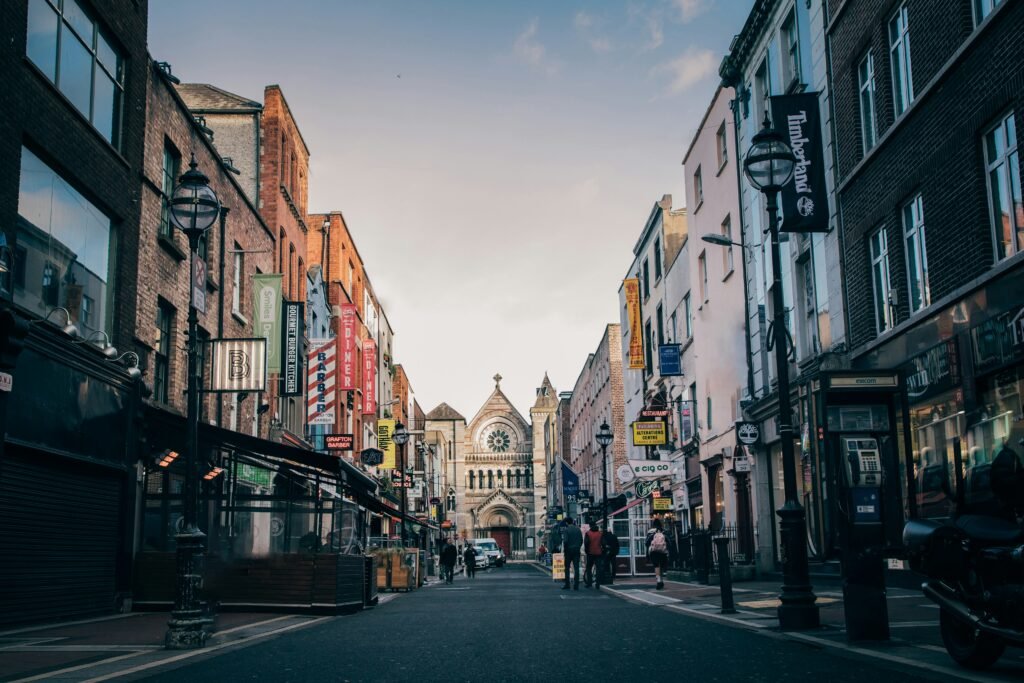
🇮🇪 Dublin, the capital of Ireland, is one of Europe’s fastest-growing cities and a major hub for technology, finance, and education. Many expats choose Dublin for career opportunities, international connectivity, and its vibrant culture. This guide covers everything you need before moving — from shipping and customs to healthcare, housing, and the cost of living.
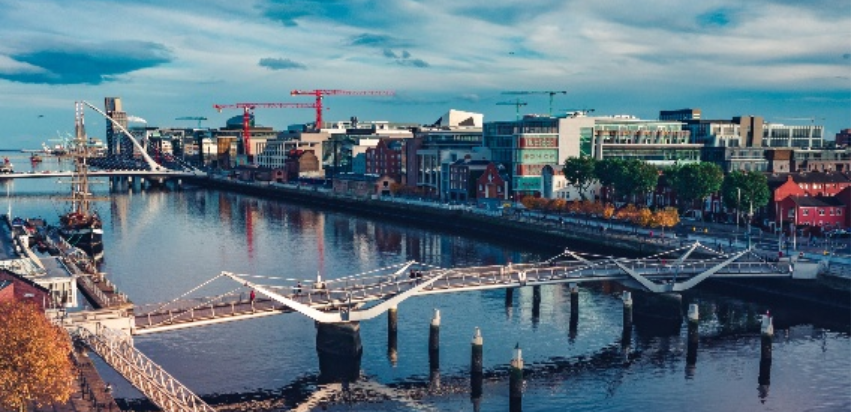
What should I know about living in Dublin at a glance?
- Flag: 🇮🇪
- Population: Around 1.2 million (greater Dublin nearly 1.5 million)
- Currency: Euro (€)
- Average Salary: ~€48,000 per year (2025)
- Language: English and Irish (Gaelic, less common in daily life)
- Climate: Mild, wet winters; cool summers with frequent rain
- Live EUR↔USD/GBP rates: Always use up-to-date converters
Reviewed by Central Statistics Office (CSO) Ireland, experts in demographics and wages, last updated in July 2025
How much does it cost to move door-to-door to Dublin?
Most international shipments arrive at Dublin Port, Ireland’s busiest port, with air cargo arriving through Dublin Airport for faster moves.
| Move Type | Time | Cost (EUR) |
| 20ft container | 3–4 weeks | 2,700–4,000 |
| 40ft container | 3–4 weeks | 4,600–6,500 |
| Air freight (1m³) | 5–8 days | 1,100–1,600 |
| Customs fees | — | 150–300 |
Reviewed by Irish Maritime Development Office and Freightos Market Data Division, experts in shipping, last updated in June 2025
Use a moving calculator for an accurate personal quote.
Real-life case: “I relocated from the US to Dublin last summer. Using a door-to-door container service, my belongings arrived in three weeks, and customs clearance was straightforward with the right documents.” — Emily K., moved in August 2025
How to understand customs and duty rules when moving belongings?
Household goods can typically be imported duty-free under Ireland’s Transfer of Residence relief if you’ve lived outside the EU for 12 months or more. Documentation includes a detailed inventory, proof of foreign residence, and evidence of moving to Ireland permanently. New items, alcohol, and tobacco are taxed separately.
Reviewed by Revenue Commissioners Ireland, experts in customs and VAT, last updated in May 2025
Real-life case:
“We moved back from Australia and submitted proof that we had lived there over a year. Customs accepted our documentation, and our furniture was released duty-free.” — James R., moved in April 2025
What are the most popular destinations in Ireland for movers?
The most popular destinations in Ireland are its five largest cities. Dublin is by far the leading hub thanks to its tech jobs and cultural life, Cork is known for its port and coastal lifestyle, Limerick has a strong industrial and academic base, Galway offers a vibrant student and arts scene, and Waterford combines history with affordability. Together, these five urban centres attract the majority of people moving to Ireland.
Reviewed by Central Statistics Office (CSO) Ireland, experts in demographics and migration, last updated in July 2025
How to plan my pre-move checklist?
- 12 weeks out: Review visa eligibility and renew passports.
- 10 weeks out: Request and compare moving quotes.
- 8 weeks out: Gather school and work documentation.
- 6 weeks out: Secure rental agreements or temporary housing in Dublin.
- 4 weeks out: Close utilities and bank accounts in your current country.
- 2 weeks out: Confirm insurance, PPS number, and flights.
Reviewed by Expatica Editorial Team, experts in relocation advice, last updated in January 2024
How much is the cost of living in Dublin?
Dublin is the most expensive city in Ireland, particularly for rental housing. Food and transport are also above European averages.
Monthly cost of living in Dublin
| Expense | Dublin (EUR/mo) | Notes |
| Rent 1-bedroom | 2,000 | City centre |
| Groceries | 450 | Higher than EU average |
| Transport | 140 | Monthly Leap Card |
| Utilities | 220 | Seasonal heating variation |
Reviewed by Numbeo Data Quality Team, experts in living cost analysis, last updated in June 2024
How to get a visa or residency in Ireland?
- EU/EEA nationals: No visa required, register after 90 days.
- Non‑EEA: Residence permits (IRP cards) required for work, family reunification, or study.
- Long-term residency: Usually after 5 years of lawful stay.
Reviewed by Immigration Service Delivery Ireland, experts in permits and visas, last updated in August 2024
How to access healthcare and insurance in Dublin?
Dublin hospitals and clinics are under the national Health Service Executive (HSE). Expats staying over 6 months may qualify for public care. Private insurance from VHI, Laya, or Irish Life supplements coverage.
Reviewed by Health Service Executive (HSE), experts in national healthcare, last updated in April 2025
How is the housing market for newcomers?
Dublin’s market is highly competitive, with high demand for city-centre apartments. Many expats rent shared housing initially. Deposits typically equal one month’s rent. Buying property requires mortgage approval, legal fees, and stamp duty.
Reviewed by Residential Tenancies Board Ireland, experts in rental regulations, last updated in April 2025
How are taxes and pensions handled in Ireland?
Irish income tax is progressive (20% and 40%) with municipal charges like USC and PRSI. Most employees and employers make pension contributions through occupational or private schemes.
Reviewed by Revenue Commissioners Ireland, experts in taxation, last updated in May 2025
How to relocate pets to Dublin?
Pets must have microchips, rabies vaccinations, and EU Pet Passports (or health certificates if non‑EU). Entry checks are carried out on arrival. Quarantine applies only where requirements are incomplete.
Reviewed by Department of Agriculture, Food and the Marine, experts in animal imports, last updated in December 2024
How to import a car or swap a driving licence?
Imported vehicles must pass customs and pay Vehicle Registration Tax (VRT) unless exempt. EU licences may be used; certain non‑EU licences can be exchanged, others require a driving test.
Reviewed by Road Safety Authority (RSA), experts in licensing and vehicles, last updated in March 2024
How to open a bank account and PPS number?
You must first get a PPS number (Personal Public Service number) to work or access services. Banks such as AIB, BOI, or Permanent TSB require proof of ID and address for account opening.
Reviewed by Department of Social Protection Ireland, experts in registration, last updated in February 2025
Where can I find tools and more resources before moving?
For extra support, use the relocation calculator, book a video survey, or view guides for Cork, Galway, Limerick, and Waterford.